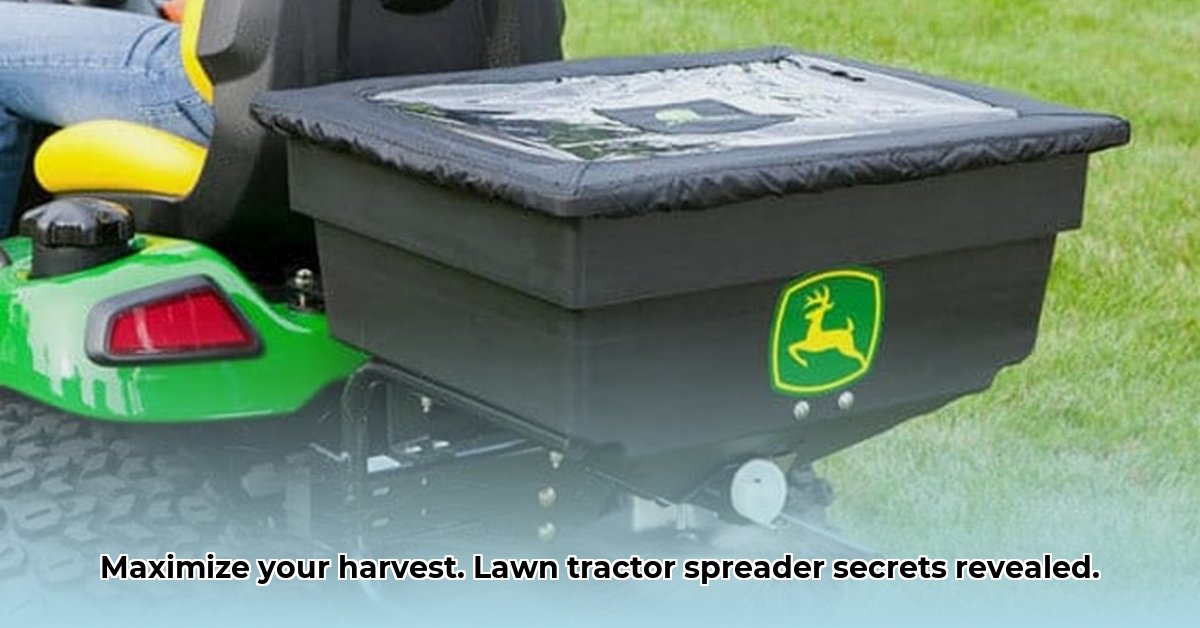
Lawn Tractor Spreader: Your Guide to Efficient Fertilizer Application
Efficient fertilizer application is crucial for maximizing yields and promoting sustainable farming practices. A pull-behind lawn tractor spreader offers a precise and effective method for distributing fertilizers and seeds, leading to healthier crops and better returns. This guide will equip you with the knowledge and skills to select and utilize a spreader effectively. For more information on older lawn tractors, check out this resource.
Understanding Your Lawn Tractor Spreader Options
Choosing the right spreader is paramount. Several types exist, each with unique features. Consider these key aspects:
- Capacity: This refers to the amount of fertilizer the spreader can hold (measured in pounds or kilograms). Larger hoppers mean fewer refills, saving time and labor. Don't forget to account for your tractor's towing capacity!
- Spreading Pattern: The distribution width (in feet or meters) impacts coverage speed. Wider patterns mean faster field coverage but may require extra precision to avoid overlap or gaps.
- Adjustable Application Rate: This feature allows precise control over the fertilizer amount applied per unit area. Precision is essential for maximizing nutrient uptake while minimizing waste and environmental impact. Isn't precise application key to optimizing your fertilizer investment?
- Spreader Type: Different spreaders are designed for different materials (fertilizer, seed, lime, etc.) and application methods (broadcast, banding).
Selecting the Right Lawn Tractor Spreader for Your Farm
Selecting the right spreader requires careful consideration of various factors. This step-by-step guide will help you make an informed decision:
- Assess Your Needs: Determine your farm size (acres or hectares), crop types, and the materials you'll be spreading (fertilizer type, seed type, etc.). This assessment forms the foundation of your spreader selection.
- Set a Realistic Budget: Consider both the initial purchase price and ongoing maintenance costs. Balancing initial investment with long-term value is crucial for financial sustainability.
- Compare Spreader Models: Use comparison charts like the one below (which is not exhaustive, but provides a good starting point) to evaluate key features:
| Feature | Option A (Small Spreader) | Option B (Large Spreader) | Considerations |
|---|---|---|---|
| Hopper Capacity | 30 lbs | 80 lbs | Larger capacity reduces refills but increases weight and cost. |
| Spreading Width | 6-8 ft | 10-12 ft | Matches your field width and tractor’s maneuverability; wider is generally faster. |
| Adjustable Rate | No | Yes | Precision application conserves resources and protects the environment. |
| Cost | Lower | Higher | Balance initial cost with long-term value, maintenance, and environmental benefits. |
- Read Reviews from Other Farmers: Online reviews and agricultural forums provide valuable insights from experienced users. These real-world experiences can highlight both advantages and potential drawbacks.
- Consult Experts: Your local agricultural extension service can provide expert advice tailored to your specific needs and local conditions. Their insights are invaluable for making informed decisions.
Best Practices for Using Your Lawn Tractor Spreader
Safe and efficient spreader use maximizes its effectiveness and longevity. Here are some best practices:
- Calibration: Accurate calibration is essential for precise fertilizer application. Follow the manufacturer's instructions carefully to ensure accurate distribution. Improper calibration leads to wasted fertilizer and reduced yield. Did you know accurate calibration can increase yields by up to 15%?
- Maintenance: Regular cleaning, lubrication, and inspection prevent breakdowns and extend the spreader's lifespan. Proactive maintenance saves money and prevents costly downtime during crucial planting and fertilization periods.
- Safe Operation: Always follow safety guidelines when operating the spreader, including wearing appropriate safety gear and maintaining safe operating speeds. A safe operation ensures both your well-being and the equipment's longevity.
- Storage: Proper storage protects the spreader from the elements and extends its useful life.
Future Trends and Sustainability
The future of lawn tractor spreaders involves increased integration with precision agriculture technologies. These advancements offer substantial gains in efficiency and sustainability:
- GPS Guidance: GPS-guided spreaders ensure even fertilizer distribution, minimizing overlaps and gaps. This pinpoint accuracy translates into significant fertilizer savings. According to recent studies, GPS-guided spreading can reduce fertilizer use by 10-15%.
- Variable Rate Technology (VRT): VRT adjusts fertilizer application rates based on real-time soil conditions, optimizing nutrient use and minimizing environmental impact. The potential for yield improvement with VRT is significant, often resulting in a 5-10% increase.
- Sensor-Based Monitoring: Sensors monitor soil conditions and plant health, providing real-time feedback for optimal fertilizer management. This data-driven approach minimizes waste and maximizes resource utilization.
"The integration of precision agriculture technologies with spreaders is transforming sustainable farming practices. Farmers are embracing these innovations to optimize yields while minimizing environmental impact and promoting long-term soil health." – Dr. Emily Carter, Agricultural Engineering Department, State University
Conclusion
Choosing and using the right pull-behind spreader is a critical step toward efficient and sustainable farming practices. By following the guidelines in this guide, you can optimize fertilizer application, maximize your yields, and contribute to a healthier environment. Remember, informed decision-making and routine maintenance are key to long-term success.